

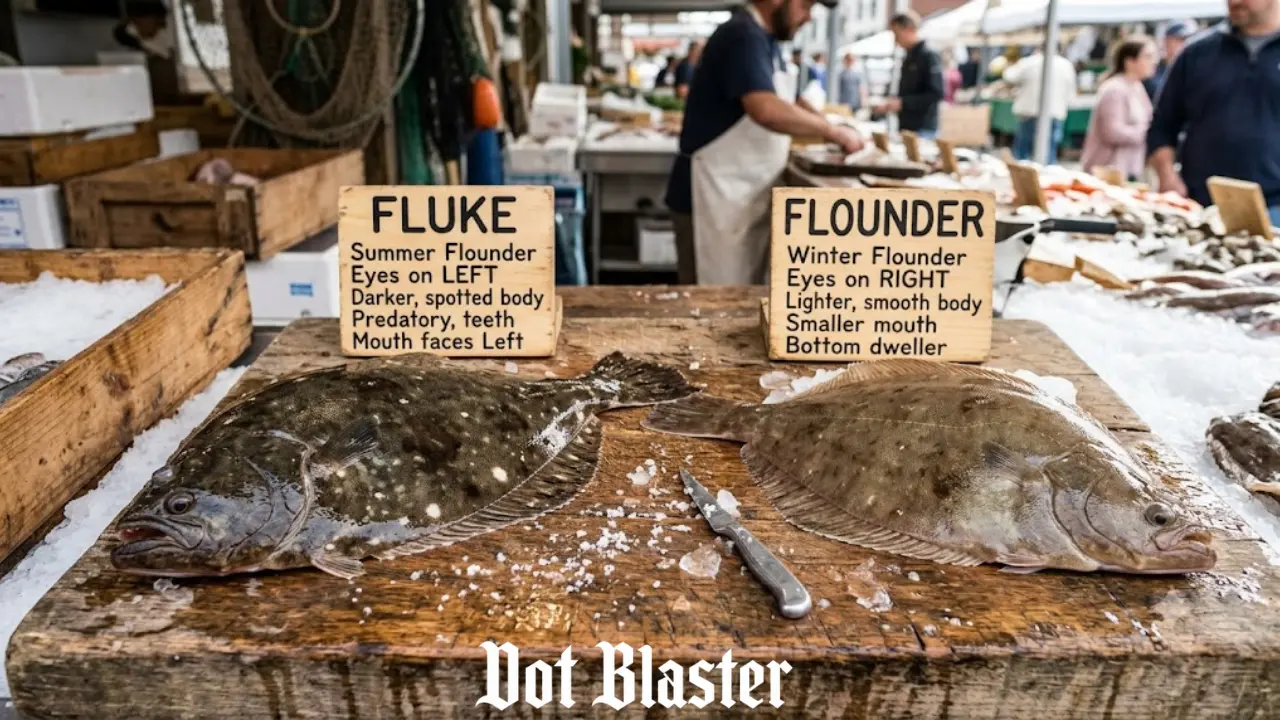
Have you ever stood at a fish market and wondered about fluke vs flounder? You are not alone. Many people, even lifelong anglers, mix up these two fish. They look alike. They swim alike. They even taste similar in some dishes. But once you know the tricks, spotting the difference becomes easy. In this guide, we will walk through everything you need to know about fluke vs flounder. We will cover their bodies, their homes, their eating habits, and even how they taste on a plate. By the end, you will never confuse them again.
What Is a Fluke?
A fluke is a type of flatfish. It is also called the summer flounder. Fluke live along the East Coast of the United States. You can find them from Maine down to North Carolina. They love warm, shallow water. This is why people call them summer fish. Fluke have a pointed head and a big mouth. Their bodies are thin and light brown. They also have small eye-like spots near their tail. These spots help fish experts tell them apart from other flatfish. When you study fluke vs flounder side by side, the fluke often looks sleeker and more built for speed.
What Is a Flounder?
Flounder is a bigger word than most people realize. It is not just one fish. It is a whole group of flatfish. There are more than 500 species that fall under this name. Some live in the Atlantic. Others live in the Pacific. Winter flounder, southern flounder, and European flounder are all part of this family. Flounder tend to have rounder bodies than fluke. Their mouths are smaller too. When people talk about fluke vs flounder, they often mean fluke versus winter flounder, since these two are commonly caught together in the same waters.
Fluke vs Flounder: Are They Really Different Fish?
Here is a fun fact that surprises many readers. Fluke are actually a type of flounder. That means every fluke is a flounder, but not every flounder is a fluke. Think of it like squares and rectangles. All squares are rectangles, but not all rectangles are squares. This is the heart of the fluke vs flounder question. Fluke simply refers to one specific member of the flounder family, known as the summer flounder. So when someone asks about fluke vs flounder, they are really asking how one type of flounder differs from the rest of its relatives.
The Eye Test: Left Side or Right Side?
One of the easiest ways to solve the fluke vs flounder puzzle is to look at the eyes. Flatfish start life swimming upright, just like normal fish. As they grow, something strange happens. One eye slowly moves across the head to join the other eye. This creates a fish that lies flat with both eyes on top. Fluke are called “left-eyed” fish. If you hold a fluke with its belly facing you and its head up, both eyes sit on the left side. Flounder, especially winter flounder, are “right-eyed” fish. Their eyes sit on the right side instead. This single trick solves most fluke vs flounder mix-ups instantly.
Color and Body Shape Differences
Looking closely at color can also help with fluke vs flounder identification. Fluke usually have a light brown or olive-green top. They often show pale, cream-colored spots scattered across their backs. Winter flounder, on the other hand, tend to be much darker. Some are almost black, which is why anglers nickname them “blackbacks.” Body shape matters too. Fluke have an oval shape with a pointier head. Flounder bodies look rounder and a bit chunkier. Both fish can change their skin color slightly to blend into sand or mud. This camouflage skill helps them hide from predators and sneak up on prey while resting on the ocean floor.
Where Do They Live? Habitat Differences Explained
Habitat is another key piece of the fluke vs flounder puzzle. Fluke prefer warmer coastal waters. They are most active in spring and summer, which explains their nickname. During colder months, fluke often move to deeper water offshore. Winter flounder do the opposite. They stay active in colder temperatures and move into shallow bays during winter. This is how they earned their name. Southern flounder live further south, especially around the Gulf of Mexico. Understanding fluke vs flounder habitats helps anglers know exactly where and when to fish for each type, based on season and water temperature.
Size and Weight Comparison
When people compare fluke vs flounder, size often comes up quickly. Fluke tend to grow larger than most other flounder types. An average fluke weighs between two and six pounds, but some monster fluke can reach twenty pounds or more. Winter flounder are usually smaller. Most weigh around one and a half pounds, with larger ones reaching about five pounds. This size difference matters a lot to fishermen, since fluke often provide a bigger, more exciting catch. If you are fishing for a personal record, understanding these size patterns in the fluke vs flounder debate could help you plan your next trip.
Feeding Habits and Behavior
Fluke and flounder do not act the same way underwater. Fluke are aggressive hunters. They chase down small fish, squid, and shrimp with quick bursts of speed. This makes them exciting to catch on a fishing line, since they strike bait hard. Flounder tend to be more patient. They bury themselves in sand and wait for prey to swim close by. Then they ambush it. This calmer style means flounder bites can feel softer and harder to notice. Knowing this behavior difference is another useful clue in the fluke vs flounder discussion, especially for anglers trying to improve their catch rate on any given day.
Taste and Texture: Which Fish Is Better to Eat?
Many home cooks care about fluke vs flounder when shopping for dinner, not just fishing. Fluke has mild, sweet-tasting meat. It is tender and works wonderfully in sushi, ceviche, or a light pan fry. Chefs love fluke because it does not overpower other flavors in a dish. Flounder, especially winter flounder, has firmer flesh with its own distinct taste. Some people find it slightly more filling. Both fish are popular in dishes like fish and chips. Honestly, unless you are a trained chef, you may not notice a huge taste difference between fluke vs flounder on your plate.
Nutritional Value of Fluke and Flounder
Beyond taste, nutrition matters too. Both fluke and flounder are excellent sources of lean protein. They are low in fat and calories, which makes them a smart choice for healthy eating. Both fish also provide vitamin B12, selenium, and small amounts of omega-3 fatty acids. Neither fish differs dramatically in nutrition, so choosing between fluke vs flounder often comes down to personal taste, price, or availability at your local market. If you are watching your diet, either fish can fit nicely into a balanced meal plan without much difference in health benefits.
Fishing Tips: Catching Fluke vs Flounder Successfully
If you want to catch fluke, focus on warmer months and sandy, shallow bottoms. Use live bait like minnows or squid strips, since fluke respond well to movement. For flounder, especially winter flounder, try fishing near structures like docks or rocky areas during cooler months. Flounder often prefer a slower, patient approach with bait sitting near the bottom. Learning these small differences in the fluke vs flounder approach can seriously boost your success rate. Local fishing regulations also vary by species and season, so always check your state’s rules before heading out on the water.
Common Myths About Fluke vs Flounder
There are plenty of myths floating around about fluke vs flounder. One common myth is that fluke and flounder are completely unrelated species. As we explained earlier, this is false, since fluke are simply one member of the larger flounder family. Another myth claims you cannot tell them apart while they are still swimming. In truth, careful anglers can spot differences in color, shape, and even swimming style. A third myth suggests all flounder taste the same. While similar, each species has slight flavor and texture differences. Knowing the truth behind these myths makes you a smarter angler and a more confident home cook.
Why This Fish Confusion Happens So Often
The fluke vs flounder confusion happens for good reason. Both fish share a family, similar habitats, and comparable body shapes. Regional names add even more confusion, since local fishermen sometimes use “fluke” and “flounder” interchangeably without meaning the exact species. Marketing at grocery stores does not always help either, since seafood labels are not always precise. This is why learning the real, science-backed differences matters so much. Once you understand the fluke vs flounder relationship clearly, you will feel much more confident the next time you are fishing, cooking, or simply chatting about seafood with friends.
Quick Summary Table: Fluke vs Flounder
To make things simple, here is a quick recap. Fluke are left-eyed, warm-water fish with pointed heads and aggressive hunting habits. They grow larger and have mild, sweet meat. Flounder, particularly winter flounder, are right-eyed, cold-water fish with rounder bodies and calmer, ambush-style hunting. They tend to be smaller with firmer meat. Remembering these simple points will help you win any fluke vs flounder debate at the dinner table or dock. Keep this summary in mind, and you will never feel confused again when someone brings up this classic seafood comparison.
Sustainability and Fishing Regulations to Know
Before you head out on the water, it helps to understand sustainability rules tied to fluke vs flounder fishing. Both fish face size limits and catch limits in many states. These rules protect fish populations for future generations. Fluke often have stricter minimum size requirements because they are heavily targeted by both recreational and commercial fishermen. Winter flounder populations have struggled in some areas, leading to seasonal closures in certain states. Always check local wildlife agency websites before fishing for either species. Following these guidelines keeps fish stocks healthy and ensures that the fluke vs flounder debate remains fun for anglers many years from now, instead of becoming a story about fish that disappeared.
How to Buy the Freshest Fluke or Flounder at the Market
Shopping for seafood can feel tricky if you do not know what to look for. When picking between fluke vs flounder at your local market, always check the eyes first. Fresh fish have clear, bright eyes, not cloudy ones. Next, smell the fish. Fresh fluke and flounder should smell like the ocean, not sour or fishy. Press the flesh gently with your finger. It should bounce back quickly instead of leaving a dent. Bright red gills are another great sign of freshness. Whether you choose fluke or flounder, these simple checks will help you bring home the best possible fish for your next home-cooked meal.
Frequently Asked Questions About Fluke vs Flounder
1. Is fluke healthier than flounder? Not really. Both fish offer similar nutrition. They are lean, low in calories, and packed with protein. Choosing between fluke vs flounder usually comes down to taste, not health benefits.
2. Can you use fluke and flounder in the same recipes? Yes, in most cases. Their mild flavors work well in similar dishes. Many recipes for fluke vs flounder are interchangeable, especially for frying, baking, or sushi preparation.
3. Which is more expensive, fluke or flounder? Prices shift by region and season. Fluke sometimes costs more due to demand from sushi restaurants. Always check your local market for current fluke vs flounder pricing.
4. Do fluke and flounder live in the same waters? Sometimes, yes. Their ranges overlap along parts of the Atlantic coast. However, fluke prefer warmer months while flounder often stay active in colder seasons.
5. How can I tell fluke vs flounder apart quickly while fishing? Check the eyes first. Fluke are left-eyed, while most flounder are right-eyed. This simple trick works almost every time you catch a flatfish.
6. Is fluke the same as summer flounder? Yes. Fluke is simply another name for summer flounder. This is one of the most important facts to remember in the fluke vs flounder conversation.
Final Thoughts on Fluke vs Flounder
Understanding fluke vs flounder does not have to feel complicated. Once you know the basic facts, everything clicks into place. Fluke are a specific type of flounder, known for their left-facing eyes, warm-water habits, and mild, sweet taste. Flounder is a much bigger family, including cold-water species like winter flounder, with rounder bodies and firmer meat. Whether you are heading out on a fishing trip or planning tonight’s dinner, this knowledge will serve you well. Next time someone brings up fluke vs flounder, you will be the one explaining the answer with confidence. Try applying these tips on your next fishing trip or seafood shopping run, and see how much more enjoyable the experience becomes.
View Also : Where to Watch Lakers vs Golden State Warriors: Your Full Game Day Guide
