

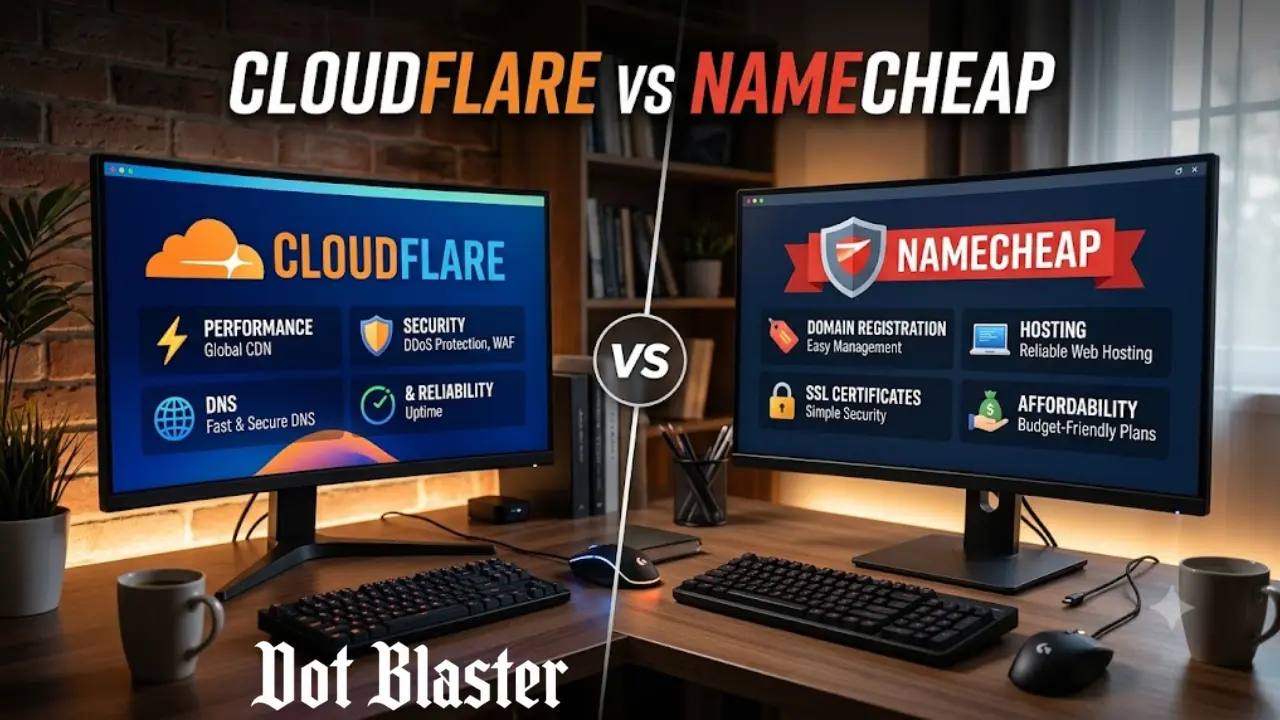
Picking the right home for your website can feel scary. There are so many companies. There are so many plans. And there is so much confusing tech talk. If you have landed on this page, you are probably trying to decide between two big names: Cloudflare and Namecheap. That is smart. Both companies are trusted by millions of website owners. But they are not the same thing, and picking the wrong one for your goal can waste your time and money.
In this guide, we will walk through Cloudflare vs Namecheap in plain, simple language. No confusing jargon. No wall of tech-speak. Just clear facts, real numbers, and honest advice. We will look at pricing, speed, security, support, and ease of use. By the end, you will know exactly which service fits your project best, or if you should actually use both together (spoiler: many smart website owners do exactly that).
What Is Cloudflare?
Cloudflare started in 2009. It began as a security and speed company, not a domain seller. Cloudflare sits between your website and the rest of the internet. Think of it like a security guard standing at your front door. It checks visitors before they reach your site. This helps block hackers and bad bots. It also speeds up your pages using a network of servers around the world.
Cloudflare later added a domain registrar service. That means you can also buy and manage domain names there. But Cloudflare’s real strength is not selling domains. Its strength is protecting and speeding up websites. Millions of sites, including huge global brands, use Cloudflare’s free tools every single day. This track record gives it strong trust and real technical authority in the hosting world.
What Is Namecheap?
Namecheap is older than you might think. It launched back in 2000 in Los Angeles. From day one, its goal was simple: sell domain names at fair prices, without sneaky tricks. Over time, Namecheap grew into much more than just a domain shop. Today it also sells web hosting, SSL certificates, email plans, and even a website builder.
Namecheap is famous for being beginner friendly. Its dashboard feels simple. You search for a domain, add it to your cart, and check out. No confusing setup steps get in your way. This makes Namecheap a favorite pick for bloggers, small business owners, and first-time website builders. When people compare Cloudflare vs Namecheap for a first website, Namecheap usually wins on pure simplicity.
Cloudflare vs Namecheap: Pricing Compared
Let’s talk money, since price matters a lot. Cloudflare sells domains at cost. That means you pay exactly what Cloudflare pays the domain registry, with zero markup added. A typical .com domain through Cloudflare costs around $10 a year. That price stays the same when you renew it too. There is no sneaky jump after year one.
Namecheap prices are also fair, but not always the cheapest. A .com domain there often runs a bit higher, and renewal prices can climb over time. Still, Namecheap regularly runs sales and discount codes that can bring first-year prices down quite low. So when comparing Cloudflare vs Namecheap on pricing, Cloudflare tends to win for long-term savings, while Namecheap can win short-term deals through coupons and bundles.
Cloudflare vs Namecheap: Domain Registration Experience
Buying a domain should feel easy. Namecheap nails this part. You type in the name you want. You see a clean list of options and prices. You click buy. Done. There are some upsell offers along the way, like privacy protection or email, but you can skip them easily.
Cloudflare works differently. You cannot search for a domain until you create a full account first. You also need to already be using Cloudflare for at least one website before you can register a new domain there. This extra step trips up a lot of beginners. So in a head-to-head Cloudflare vs Namecheap comparison for pure domain buying, Namecheap is the smoother, faster, and more newbie-friendly choice by a wide margin.
Cloudflare vs Namecheap: DNS Speed and Performance
DNS is like the internet’s phone book. It tells browsers where to find your website. Faster DNS means your pages load quicker for visitors. This is one area where Cloudflare truly shines. Cloudflare built its whole business around speed and network performance, so its DNS is considered some of the fastest in the entire industry.
Namecheap’s DNS is solid and reliable for everyday use. It works fine for most small sites and blogs. But it does not match Cloudflare’s raw speed or its huge global server network. If your website depends heavily on fast loading times, like an online store or a news site, Cloudflare usually gives you the performance edge. That is a big reason many people pair a Namecheap domain with Cloudflare’s free DNS service.
Cloudflare vs Namecheap: Security Features
Security keeps your website safe from hackers and bad traffic. Cloudflare is a true leader here. It offers free DDoS protection, which stops flood attacks meant to crash your site. It also has a web application firewall, often shortened to WAF, that blocks harmful requests before they ever reach your server. These tools come free with most Cloudflare plans.
Namecheap also offers useful security tools, like free WHOIS privacy and SSL certificates. These protect your personal details and encrypt data between your site and visitors. However, Namecheap does not offer the same deep layer of network-level protection that Cloudflare provides. When people weigh Cloudflare vs Namecheap purely on security strength, Cloudflare tends to come out ahead, especially for busy or high-traffic websites that attract more attacks.
Cloudflare vs Namecheap: Web Hosting Options
Web hosting is where your actual website files live. Namecheap offers full hosting plans, including shared hosting, VPS, and dedicated servers. This makes it a true one-stop shop. You can buy your domain, your hosting, your email, and your SSL certificate all in one place. That convenience saves time and often saves money too.
Cloudflare is a different animal. It does not sell traditional web hosting the way Namecheap does. Instead, it offers developer tools like Cloudflare Pages and Cloudflare Workers, which are great for modern, code-based projects. These are powerful, but they are built more for developers than casual users. So for beginners wanting simple, all-in-one hosting, Namecheap is the clear winner in this part of the Cloudflare vs Namecheap debate.
Cloudflare vs Namecheap: Ease of Use for Beginners
Not everyone building a website is a tech expert. Many people just want a simple blog or a small business page. For these users, ease of use matters a lot. Namecheap was built with these everyday users in mind. Its dashboard uses plain language, guided steps, and helpful tooltips.
Cloudflare, on the other hand, was built for people who understand networking and web infrastructure a bit more. Terms like DNS records, proxy status, and cache rules show up often. These can confuse someone who just wants to launch a simple site. If you are brand new to websites, Namecheap will likely feel far less stressful. If you already have some tech comfort, Cloudflare’s extra power becomes a real asset instead of a hurdle.
Cloudflare vs Namecheap: Customer Support
Good support matters most when something breaks. Namecheap offers 24/7 live chat support, and response times are usually fast, often just a few minutes during busy hours. This quick help is a big comfort for beginners who panic when their site goes down.
Cloudflare’s support depends on your plan. Free users mainly rely on community forums and help articles. Paid business plans do get faster, more direct support. But if you are on a free Cloudflare account and something goes wrong, you may wait much longer for a real answer compared to Namecheap’s live chat team. For anyone who values quick human help, this is a meaningful point in the Cloudflare vs Namecheap comparison.
Cloudflare vs Namecheap: Domain Extensions and TLD Selection
TLD stands for top-level domain. That is the ending part of a web address, like .com, .net, or .shop. Namecheap supports an enormous list of TLDs, covering hundreds of options along with many country-specific endings. This wide selection helps businesses find a creative, available name.
Cloudflare keeps its TLD list much smaller on purpose. It focuses on the most common and trusted extensions instead of trying to offer everything. This keeps things simple, but it also means some unusual or niche domain endings simply are not available there. If your dream domain name uses a rare extension, Namecheap is far more likely to have it in stock.
Cloudflare vs Namecheap: Uptime and Reliability
Uptime means how often a service stays online and working. Both Cloudflare and Namecheap generally offer strong, dependable uptime. Cloudflare’s massive global network gives it a slight edge here, often reaching uptime numbers close to 99.99 percent. That tiny difference matters a lot for large stores or high-traffic sites.
Namecheap also delivers strong, trustworthy uptime for its hosting customers, generally staying above 99.9 percent as well. For most small blogs or local business sites, this difference is barely noticeable in daily life. But for larger operations where every second of downtime costs real money, Cloudflare’s edge network can provide extra peace of mind and stronger reliability under heavy traffic pressure.
The Smartest Setup: Using Cloudflare and Namecheap Together
Here is a secret many experienced website owners already know. You do not have to pick only one. A very popular setup is buying your domain name through Namecheap, then pointing that domain’s DNS to Cloudflare. This gives you Namecheap’s friendly buying process and huge TLD selection, plus Cloudflare’s blazing speed and strong free security tools.
This combo setup is free to do and takes just a few simple steps inside your Namecheap account settings. Many bloggers, small businesses, and even large companies use this exact pairing. So instead of framing this as a strict Cloudflare vs Namecheap battle, think of it as a partnership. You get the best strengths from both companies, without paying extra or sacrificing speed, safety, or simplicity anywhere along the way.
Cloudflare vs Namecheap: Which One Fits Your Project?
So, which service actually fits you? If you are a complete beginner building your very first website, Namecheap is likely your best starting point. Its friendly dashboard, wide domain selection, and helpful live chat support make the whole process feel far less stressful for new users.
If you already run a website and care deeply about speed and security, Cloudflare becomes extremely valuable. Its free CDN, DDoS protection, and lightning-fast DNS can genuinely transform how your site performs for visitors around the world. Many growing businesses eventually add Cloudflare on top of their existing Namecheap domain once traffic starts climbing. There is no single wrong answer here. Your goals, comfort level, and site size should guide your final Cloudflare vs Namecheap decision.
Final Thoughts on Cloudflare vs Namecheap
Choosing between Cloudflare and Namecheap does not have to be stressful. Namecheap wins for simple, affordable domain buying and beginner-friendly hosting. Cloudflare wins for raw speed, strong free security, and developer-grade tools. Neither company is truly “bad,” they simply serve slightly different needs within the website world.
If you are still unsure, start with Namecheap for your domain purchase, since it is simple and low-risk. Then, once your site is live, connect it to Cloudflare’s free plan for an instant boost in speed and safety. This combined approach gives you the strongest possible foundation without spending extra money. Whatever you choose, make sure it matches your comfort level, your budget, and your long-term website goals.
Frequently Asked Questions
Is Cloudflare cheaper than Namecheap for domains? Yes, generally. Cloudflare sells domains at cost, often around $10 a year for a .com, with no markup on renewals. Namecheap prices are fair too, but renewals can run a bit higher over time.
Can I use Cloudflare and Namecheap together? Absolutely, and many people do exactly this. You buy your domain through Namecheap, then point its DNS settings to Cloudflare for extra speed and free security protection.
Which is better for beginners, Cloudflare or Namecheap? Namecheap is usually easier for total beginners. Its dashboard is simple, and you do not need a full account setup just to search for a domain name.
Does Namecheap offer free WHOIS privacy like Cloudflare? Yes, both companies include free WHOIS privacy protection on most eligible domains, which hides your personal contact details from public domain records.
Is Cloudflare good for web hosting? Not in the traditional sense. Cloudflare focuses on speed, security, and developer tools like Pages and Workers, rather than classic shared hosting plans like Namecheap offers.
Which company has faster customer support, Cloudflare or Namecheap? Namecheap typically responds faster through 24/7 live chat. Cloudflare’s free plan relies more on help articles and community forums, though paid plans get quicker support.
View Also : Joint Strike Fighter vs F 22 Raptor: The Ultimate Stealth Jet Showdown
