

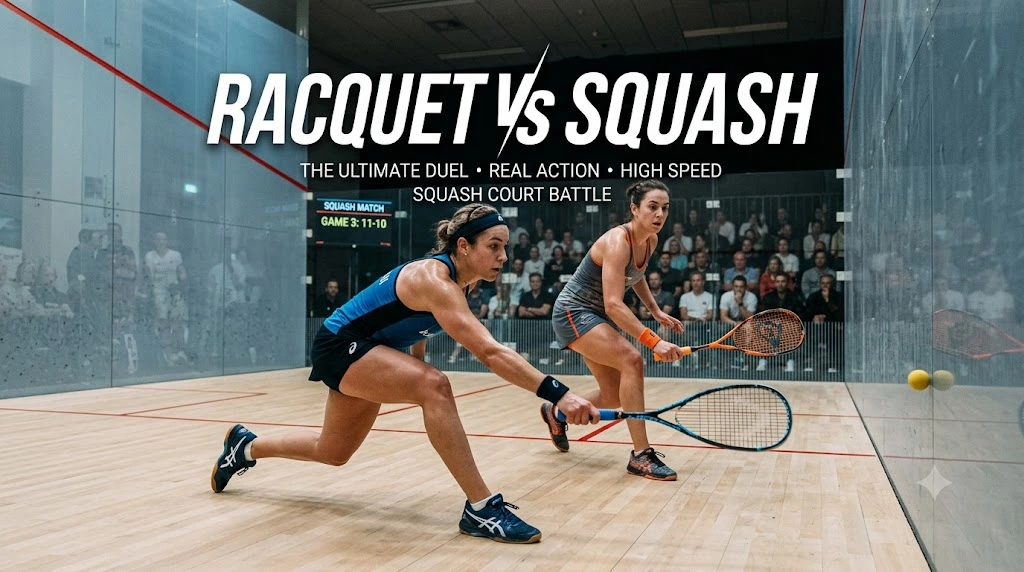
Have you ever stood in a sports store, staring at two different rackets, wondering which game to try? You’re not alone. Many people get confused when comparing racquet vs squash. Both sports look similar at first glance. Both use a small court, a racket, and a bouncy ball. But once you dig deeper, you’ll find they are quite different games.
In this article, we will break down everything about racquet vs squash. We’ll talk about the courts, the rules, the equipment, and the health benefits. By the end, you’ll know exactly which sport fits your style, your body, and your goals. Let’s get started.
What Is Racquetball?
Racquetball is a fast indoor sport played with a short racket and a hollow rubber ball. It was invented in the United States in the 1950s. A man named Joseph Sobek created it because he wanted a fun mix of handball and tennis. Today, racquetball is popular in gyms and fitness clubs across America.
The game is played inside a four-walled court. Players can hit the ball off any wall, including the ceiling. This makes racquetball a game full of surprises. The ball moves fast and bounces in unpredictable ways. You need quick reflexes and sharp focus to play well.
Racquetball uses a bigger, bouncier ball than squash. The racket is also shorter and lighter. This makes swings quicker and shots more powerful. Many players say racquetball feels more relaxed and less technical than squash, which is why beginners often pick it up faster.
What Is Squash?
Squash is another indoor racket sport, but it comes from England. It started in the 1830s at Harrow School. Students used a softer ball that “squashed” on impact, which is how the sport got its name. Squash later spread across the world and became an Olympic-recognized sport.
Unlike racquetball, squash is played with a smaller, harder ball. The ball doesn’t bounce much, especially when it’s cold. This means players need more precision and control. Squash rewards patience, strategy, and smart shot placement over raw power.
The squash racket is longer and thinner than a racquetball racket. Players use wrist control and finesse to guide their shots. Many experts consider squash to be more technical and demanding on footwork. If you enjoy chess-like strategy in sports, squash might feel more rewarding to you.
Racquet vs Squash: Court Differences
When comparing racquet vs squash, the court size and shape play a huge role. A racquetball court is a perfect cube. All four walls, plus the ceiling and floor, are fair play areas. This gives players many angles to work with during a rally.
A squash court, on the other hand, has specific “out” lines on the walls. The ceiling is not part of play. There are also service boxes and boundary lines that squash players must respect. This makes squash courts feel more structured and rule-heavy compared to racquetball courts.
Because racquetball allows ceiling shots, rallies can go in wild directions. Squash rallies tend to stay lower and more controlled. If you like fast chaos, racquetball courts offer that thrill. If you prefer order and precision, squash courts feel more disciplined.
Equipment Differences: Ball, Racket, and Attire
The equipment used in racquet vs squash is one of the biggest differences between these two sports. Racquetball uses a bouncy rubber ball about 2.25 inches wide. This ball can bounce high and fast, especially in warm conditions.
Squash balls are smaller, made of rubber too, but they barely bounce. Squash balls even come in different speeds, marked by colored dots. Beginners often use a ball with a blue dot because it bounces more and is easier to hit.
Rackets also differ quite a bit. A racquetball racket is shorter, usually around 22 inches long. A squash racket stretches closer to 27 inches. This length difference changes your swing style completely. Squash swings feel more like a whip, while racquetball swings feel more like a punch.
Scoring Systems Compared
Scoring is another area where racquet vs squash rules split apart. Traditional racquetball uses “side-out” scoring, where only the serving player can score points. Games are usually played to 15 points. However, many modern leagues now use rally scoring, where every point counts no matter who serves.
Squash almost always uses rally scoring. Games are typically played to 11 points, and you must win by two. This means squash matches can feel tense near the end, since a small mistake can cost you the game.
Because of these scoring differences, racquetball matches can sometimes end quickly if one player dominates serves. Squash matches tend to feel more balanced, since both players can score on every single rally. This makes squash slightly more forgiving for players who are still learning.
Which Sport Is Easier for Beginners?
If you’re new to racket sports, you might wonder which one is friendlier to learn. In the racquet vs squash debate, most coaches agree that racquetball is easier to pick up quickly. The bigger ball and shorter racket make it simpler to hit the ball with power, even if your aim isn’t perfect yet.
Squash demands more precision from day one. Since the ball doesn’t bounce much, timing becomes very important. New squash players often struggle just to keep rallies going during their first few sessions.
That said, easier doesn’t always mean better. Some people enjoy the challenge that squash offers. Learning something hard can feel more rewarding once you improve. It really depends on whether you want fast fun right away or a slower climb toward mastery.
Fitness and Health Benefits
Both sports offer amazing workouts, but they train your body differently. Racquetball involves short bursts of speed and powerful swings. This builds strong shoulders, arms, and quick reflexes. It’s a great sport for building explosive power.
Squash, meanwhile, is known as one of the most demanding cardio sports in the world. Some studies and fitness rankings have placed squash near the top for calorie burn per hour. The constant lunging, twisting, and sprinting builds serious leg strength and stamina.
If your goal is heart health and endurance, squash might edge ahead. If you want a fun way to build upper body power without long, exhausting rallies, racquetball could be the better fit. Either way, both sports beat sitting on the couch by a long shot.
Skill Development and Strategy
Strategy plays a big role in racquet vs squash, but in different ways. Racquetball strategy often focuses on power shots and using the ceiling to confuse opponents. Since the ball moves so fast, quick decision-making matters more than long-term planning.
Squash strategy is slower and more thoughtful. Players think several shots ahead, almost like a game of chess. Good squash players use drop shots, lobs, and tight corner shots to tire out their opponents before going for the winning strike.
This difference means squash players often develop stronger tactical thinking over time. Racquetball players tend to develop faster reaction speed. Both skills are valuable, but they train your brain and body in unique ways.
Popularity Around the World
Another interesting part of the racquet vs squash comparison is where each sport is most popular. Racquetball is mostly loved in the United States, Canada, and parts of Latin America. It grew popular through fitness clubs and community centers.
Squash has a much bigger global footprint. It’s popular in the United Kingdom, Egypt, Pakistan, India, and many parts of Europe. Squash has also pushed for years to become an official Olympic sport, showing its serious international following.
If you ever travel abroad and want to find a court to play on, squash will likely be easier to find outside North America. Racquetball courts are more common within the U.S. This global reach also means squash has more professional tournaments and world rankings.
Cost and Accessibility
Cost matters when choosing a new hobby. Generally, racquetball equipment is a bit cheaper for beginners. A basic racquetball racket, ball, and eyewear can cost less than squash gear, especially glasses and premium racket models.
Court access also varies by location. In the U.S., many gyms include racquetball courts as part of membership. Squash courts are more common in private clubs or dedicated squash centers, which can sometimes mean higher fees.
Before choosing between racquet vs squash, check what’s available near you. Sometimes the deciding factor isn’t the sport itself, but simply which court you can easily reach and afford to use on a regular basis.
Safety and Injury Risks
Safety should never be an afterthought in either sport. Racquetball moves at high speed, so eye protection is essential. Getting hit by a fast-moving ball or racket swing can cause serious eye injuries if you’re not wearing proper goggles.
Squash also carries injury risks, mostly from sudden stops, lunges, and twists. Because squash demands quick direction changes, knee and ankle injuries are fairly common among regular players. Warming up properly before matches really helps reduce this risk.
In both sports, protective eyewear is strongly recommended. Many squash and racquetball clubs actually require it before you’re allowed on the court. Safety gear might feel like a hassle, but it protects your eyes and joints for years of enjoyable play.
Racquet vs Squash: Which Should You Choose?
So, after everything we’ve covered, how do you decide between racquet vs squash? Start by thinking about your personality. If you love fast, powerful, high-energy games, racquetball will likely feel exciting from your very first session.
If you enjoy strategy, patience, and a serious cardio challenge, squash could become your new favorite hobby. Squash also offers stronger long-term competitive opportunities if you dream of joining leagues or tournaments someday.
Honestly, the best way to choose is to simply try both. Many clubs offer trial sessions or beginner classes for racquet vs squash. Grab a racket, step onto the court, and see which game makes you smile the most after just one hour.
Final Thoughts and Encouragement
Choosing between racquet vs squash doesn’t have to be stressful. Both sports offer fantastic exercise, mental focus, and social fun. Whichever one you choose, you’ll build strength, sharpen your reflexes, and probably make new friends along the way.
Don’t overthink it too much. Sports are meant to be enjoyed, not stressed over. Grab a friend, book a court, and give both games an honest try this month. You might discover a new lifelong hobby you never expected to love.
Ready to pick your racket? Head to your local gym, ask about beginner sessions, and start swinging today. Your body and mind will thank you for it.
Frequently Asked Questions
1. Is racquetball or squash better for weight loss? Both burn plenty of calories, but squash tends to burn more per hour due to constant sprinting and lunging across a smaller court space.
2. Can I use a squash racket to play racquetball? No, the rackets are built differently in length and weight. Using the wrong racket can hurt your performance and even increase injury risk.
3. Which sport is safer, racquetball or squash? Both carry some risk. Racquetball has more eye injury concerns, while squash has more joint and ankle injury concerns from quick direction changes.
4. Do I need special shoes for racquet vs squash? Yes, both sports require non-marking indoor court shoes. These shoes give you grip and support for quick stops and sharp turns.
5. Which sport is more popular globally, racquetball or squash? Squash has a much larger international following, especially in Europe, Asia, and the Middle East, while racquetball remains mostly popular in North America.
6. How long does it take to get good at squash or racquetball? Racquetball is usually easier to enjoy within your first few sessions. Squash often takes a bit longer to master due to its precision-based ball control.
View Also : GeForce RTX 4060 8GB vs GeForce RTX 4060 Ventus 2: The Full Buyer’s Guide
