


Rodrigo Santoro is one of Brazil’s most internationally recognized actors, with a career that has successfully connected Brazilian cinema and television with major Hollywood productions. Over several decades, he has taken on a wide variety of roles, from emotionally demanding Brazilian dramas to action blockbusters, romantic comedies, historical stories and science-fiction television.
Many international viewers know Santoro as Xerxes from 300, Karl from Love Actually, Paulo from Lost, or Hector Escaton from Westworld. However, his career began much earlier in Brazil, where he established himself through television and film before becoming a familiar face to audiences around the world.
In 2026, Santoro continues to remain active across both Brazilian and international entertainment. His recent work includes Brasil 70: A Saga do Tri, Corrida dos Bichos, and the international action film Runner. He is also connected with The Pilgrimage, a screen adaptation of Paulo Coelho’s novel.
His career is notable not simply because of his Hollywood success, but because he has continued returning to Brazilian productions throughout his international journey.
Quick Bio of Rodrigo Santoro
| Category | Details |
|---|---|
| Full Name | Rodrigo Junqueira dos Reis Santoro |
| Date of Birth | August 22, 1975 |
| Age in 2026 | 51 |
| Birthplace | Petrópolis, Rio de Janeiro, Brazil |
| Nationality | Brazilian |
| Profession | Actor and Producer |
| Years Active | Since the 1990s |
| Known For | 300, Love Actually, Lost, Westworld |
| Famous Role | Xerxes in 300 |
| Brazilian Breakthrough | Hilda Furacão |
| Major Brazilian Film | Bicho de Sete Cabeças |
| Recent TV Project | Brasil 70: A Saga do Tri |
| Recent Film Projects | Corrida dos Bichos, Runner |
| Upcoming Project | The Pilgrimage |
| Spouse | Mel Fronckowiak |
| Children | Two |

Who Is Rodrigo Santoro?
Rodrigo Santoro is a Brazilian actor and producer who began his professional career during the 1990s.
Born in Petrópolis, Rio de Janeiro, he became known to Brazilian audiences through television before gradually establishing himself in feature films. His early work gave him the opportunity to experiment with different characters and genres.
Unlike some actors who become strongly associated with one type of role, Santoro has consistently moved between very different projects.
His filmography includes romance, drama, comedy, action, historical stories, science fiction and socially focused cinema.
That flexibility has helped him maintain a career in both Brazil and international entertainment.
Rodrigo Santoro’s Early Acting Career
Santoro started gaining recognition through Brazilian television during the 1990s.
He appeared in productions such as Olho no Olho, Pátria Minha, Explode Coração and O Amor Está no Ar.
These early television roles gave him valuable experience and helped him become increasingly recognizable to Brazilian viewers.
One of the most important early opportunities of his career came with the 1998 miniseries Hilda Furacão.
Santoro played Frei Malthus, a role that helped increase his profile and demonstrated his ability to handle more serious and complex material.
His early television work became an important foundation for the film career that followed.
Bicho de Sete Cabeças and Brazilian Cinema
One of Rodrigo Santoro’s most significant early film roles came in Bicho de Sete Cabeças, released in 2000.
The movie explored difficult subjects involving family relationships, mental health institutions and the treatment of young people.
Santoro played Neto, a young man whose life changes dramatically after being placed in a psychiatric institution.
The performance required emotional intensity and helped establish Santoro as an actor capable of handling serious dramatic material.
The film became an important milestone in Brazilian cinema and played a major role in the development of Santoro’s reputation as a film actor.
Behind the Sun
Santoro continued his Brazilian film career with Behind the Sun, also known by its Portuguese title Abril Despedaçado.
Directed by Walter Salles, the movie was recognized internationally and introduced more viewers outside Brazil to Santoro’s work.
The film’s dramatic storytelling was very different from the large-scale Hollywood productions that Santoro would later become known for.
His involvement in projects like this demonstrated his interest in character-driven filmmaking and serious dramatic stories.
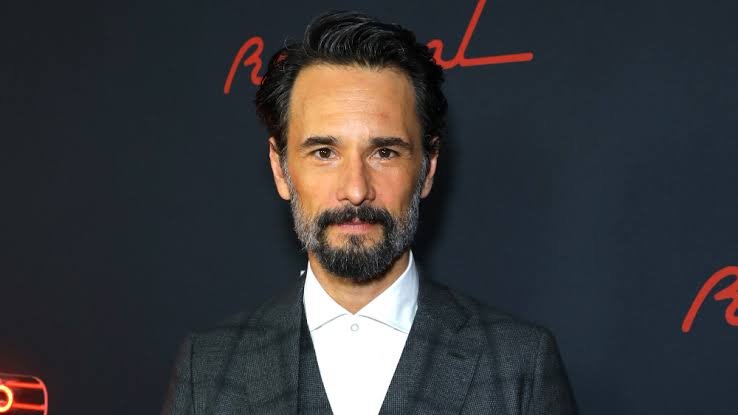
Rodrigo Santoro in Love Actually
In 2003, Santoro appeared in the popular romantic comedy Love Actually.
He played Karl, a character involved in one of the film’s romantic storylines.
The movie featured a large ensemble cast and became internationally successful.
For Santoro, the role represented an important step into mainstream English-language cinema.
Although Karl was not the central character of the movie, Love Actually introduced Santoro to a much wider international audience.
The project remains one of the most recognizable romantic films in which he has appeared.
Charlie’s Angels: Full Throttle
Santoro also appeared in Charlie’s Angels: Full Throttle in 2003.
The movie was a major change from the serious Brazilian dramas of his earlier career.
It combined action, comedy and large-scale Hollywood entertainment.
Working on the production gave Santoro additional international experience and helped him become more familiar with major American film productions.
His growing international presence eventually led to some of the biggest roles of his career.
Rodrigo Santoro in Lost
Another important milestone came when Santoro joined the cast of the television series Lost.
He played Paulo, a character introduced during the show’s later seasons.
Lost was known for its combination of mystery, adventure, science fiction and character-focused storytelling.
Being part of such a widely watched international series further expanded Santoro’s recognition among television audiences.
Although Paulo was introduced later in the story, the character became a memorable part of Santoro’s television career.
Xerxes in 300
For many international viewers, Rodrigo Santoro is most strongly associated with Xerxes in 300.
Released in 2006, the movie was directed by Zack Snyder and based on Frank Miller’s graphic novel.
Santoro’s portrayal of Xerxes was visually dramatic and very different from many of his earlier roles.
The character was presented as a powerful Persian ruler with an imposing screen presence.
Santoro’s transformation for the role became one of the most recognizable visual elements of the film.
The success of 300 significantly increased his international profile and established him as a familiar actor in major Hollywood productions.
Returning as Xerxes
Santoro returned as Xerxes in 300: Rise of an Empire, released in 2014.
The film expanded the world established by the original movie and continued the story surrounding the Persian Empire and Greek resistance.
Returning to one of his most famous characters gave Santoro another opportunity to work within the visually distinctive style of the franchise.
The two 300 movies remain some of the projects most closely associated with his international career.
Rodrigo Santoro in Westworld
Santoro later took on another major television role in HBO’s science-fiction series Westworld.
He played Hector Escaton, a character living within the show’s futuristic world.
Westworld explored themes involving artificial intelligence, technology, consciousness and identity.
The series required its actors to work within a complicated narrative structure, and Santoro’s character became one of the recognizable figures in the show’s world.
His performance as Hector demonstrated another side of his acting ability and allowed him to move from historical fantasy and action into sophisticated science fiction.
Other Notable Movies
Rodrigo Santoro has appeared in many other international movies throughout his career.
His credits include Hemingway & Gellhorn, What to Expect When You’re Expecting, The Last Stand, Focus, The 33, Ben-Hur, Jane Got a Gun, Project Power and 7 Prisoners.
These projects cover several different genres.
Some are action movies, while others focus on drama, history, crime or social issues.
This variety has become one of the defining characteristics of Santoro’s career.
Rodrigo Santoro and Brazilian Films
Even after achieving international recognition, Santoro continued to work in Brazilian cinema.
This is an important part of his career because he never completely shifted away from Brazilian productions after entering Hollywood.
His Brazilian filmography includes projects such as Heleno, 7 Prisoners, The Son of a Thousand Men and The Blue Trail.
These films have allowed him to work with Brazilian directors and explore stories connected to Brazilian society, culture and history.
His ability to move between Brazilian and international productions has helped create a distinctive career.

7 Prisoners
7 Prisoners is a socially focused drama that explores exploitation and human trafficking.
The story follows young workers who become trapped in a difficult system and must make complicated decisions in order to survive.
Santoro’s participation in the film added another serious dramatic project to his filmography.
The production was very different from the spectacle of 300 or the futuristic world of Westworld.
Instead, it focused heavily on social realities and human relationships.
The Son of a Thousand Men
Santoro also appeared in The Son of a Thousand Men, a Brazilian adaptation based on the novel by Valter Hugo Mãe.
The story explores loneliness, family, belonging and human connection.
The film represents another example of Santoro’s continued interest in character-driven Brazilian cinema.
It also demonstrates that his international career has not prevented him from participating in smaller, more intimate productions.
Rodrigo Santoro’s 2026 Projects
The year 2026 represents another active period in Santoro’s career.
One of his notable projects is Brasil 70: A Saga do Tri, in which he portrays João Saldanha.
The production focuses on Brazil’s historic 1970 football campaign and the country’s third World Cup victory.
Playing a real historical figure presents a different challenge from portraying a fictional character.
Santoro had to approach Saldanha as an actual person with a documented public history.
The project adds a historical and sporting dimension to his 2026 work.
Corrida dos Bichos
Another significant 2026 project is Corrida dos Bichos.
The film presents a futuristic version of Rio de Janeiro affected by environmental destruction and social inequality.
Santoro plays Abu, a former racer.
The story combines action and science fiction with social themes, creating a world that is very different from the settings of many of his previous movies.
His role gives him another opportunity to work in a Brazilian production while taking on a physically demanding character.
Runner
Santoro also appears in the international action thriller Runner.
The movie features an international cast including Alan Ritchson and Owen Wilson.
Santoro plays Damián Zaldívar, a character connected to the criminal side of the story.
The movie places Santoro back into the type of international action filmmaking that has appeared several times throughout his career.
It also demonstrates that he continues to work comfortably with international casts and productions.
The Pilgrimage
One of Santoro’s interesting upcoming projects is The Pilgrimage, based on Paulo Coelho’s novel.
Santoro plays Petrus, an enigmatic guide who accompanies Paulo during a pilgrimage along the Camino de Santiago.
Johnny Massaro plays Paulo.
The story combines physical travel with spiritual and personal exploration.
Santoro is also involved with the project as an executive producer.
The production represents an interesting combination of his acting and producing work and connects Brazilian talent with an international story and setting.
Rodrigo Santoro’s Acting Style
It is difficult to describe Santoro through a single acting style because his roles have been extremely diverse.
His performance in Bicho de Sete Cabeças was emotionally intense and grounded in drama.
His portrayal of Xerxes in 300 depended heavily on physical transformation, visual presence and theatrical intensity.
Karl in Love Actually required a much more restrained romantic-comedy approach.
Meanwhile, Hector in Westworld existed within a complicated science-fiction environment.
His portrayal of João Saldanha adds yet another dimension because it involves representing a real historical personality.
This ability to adapt has been one of the strongest characteristics of Santoro’s career.
Personal Life and Family
Rodrigo Santoro is married to Brazilian actress and presenter Mel Fronckowiak.
The couple married in 2016 and have two children.
Santoro generally maintains a relatively private approach to his family life.
While his professional projects frequently receive international attention, he tends to keep his family away from the center of his public career.
This balance has allowed him to maintain a successful entertainment career while protecting much of his personal life.
Rodrigo Santoro and Travel
Travel has naturally played an important role in Santoro’s professional life.
Because he has worked in Brazil, the United States and Europe, his career has required him to spend significant periods in different countries.
His work on The Pilgrimage is a particularly interesting example.
The production took him to Spain and connected his professional life with the Camino de Santiago, one of Europe’s most famous pilgrimage routes.
Traveling for a film can also influence an actor’s understanding of a character and environment.
For Santoro, international locations have become a normal part of a career that crosses cultural and geographic boundaries.
Awards and Recognition
Throughout his career, Santoro has received recognition for his work in Brazilian and international productions.
His early Brazilian performances helped establish his reputation as a serious actor.
Later, roles such as Xerxes in 300 and Hector in Westworld brought him greater international visibility.
He has also received recognition for his contribution to Brazilian cinema and international entertainment.
His career demonstrates that an actor can achieve global recognition while continuing to remain connected to their home country’s film industry.
Why Rodrigo Santoro’s Career Is Unique
Rodrigo Santoro’s career stands out because of its range.
Different audiences may know him from completely different projects.
Some viewers recognize him from 300, while others remember him from Love Actually, Lost or Westworld.
Brazilian audiences have an even longer history with his television and film work.
His recent projects show that he continues to explore different genres instead of depending entirely on his most famous roles.
That willingness to change characters and environments has helped keep his career active for more than two decades.
Rodrigo Santoro’s Future
Santoro’s current projects suggest that he will continue balancing Brazilian productions with international entertainment.
His involvement in The Pilgrimage is particularly notable because it expands his responsibilities beyond acting.
At the same time, projects such as Runner continue his connection with international action cinema.
His Brazilian projects demonstrate that his relationship with the country’s film industry remains strong.
As his career develops, audiences can expect to see him continue exploring different characters, genres and filmmaking environments.
Conclusion
Rodrigo Santoro has developed a long and diverse career that extends from Brazilian television to internationally recognized movies and television series.
His journey includes early Brazilian productions such as Hilda Furacão and Bicho de Sete Cabeças, followed by international projects including Love Actually, Lost, 300 and Westworld.
His career in 2026 remains equally varied.
With Brasil 70: A Saga do Tri, Corrida dos Bichos, Runner and The Pilgrimage, Santoro continues to work across Brazilian and international productions.
What makes his career particularly interesting is the balance between global recognition and his continuing connection to Brazilian cinema.
Rather than limiting himself to one genre or one type of character, he has repeatedly taken on different challenges throughout his career.
At 51, Rodrigo Santoro remains an experienced and versatile performer whose career continues to evolve. His 2026 projects represent another chapter in a journey that has successfully crossed languages, countries and genres.
