

Have you ever stood at a shooting range and heard someone talk about skeet vs trap? Maybe you nodded like you understood, but deep down, you had no clue what the difference was. Don’t worry. You are not alone. Many new shooters mix these two sports up all the time.
Skeet vs trap shooting are both clay target sports. Both use shotguns. Both send clay disks flying through the air. But that is where the similarities end. Once you learn the details, you will see they are quite different games with their own rules, skills, and fun factor.
In this guide, we will break down everything you need to know. We will cover the history, the equipment, the field setup, and which sport might be the best fit for you. By the end, you will be able to talk about skeet vs trap like a true expert. Let’s get started.
What Is Skeet Shooting?
Skeet shooting is a clay target sport that started back in the 1920s. It began in Massachusetts as a way for hunters to practice their bird hunting skills. The name “skeet” actually comes from an old Norwegian word meaning “shoot.”
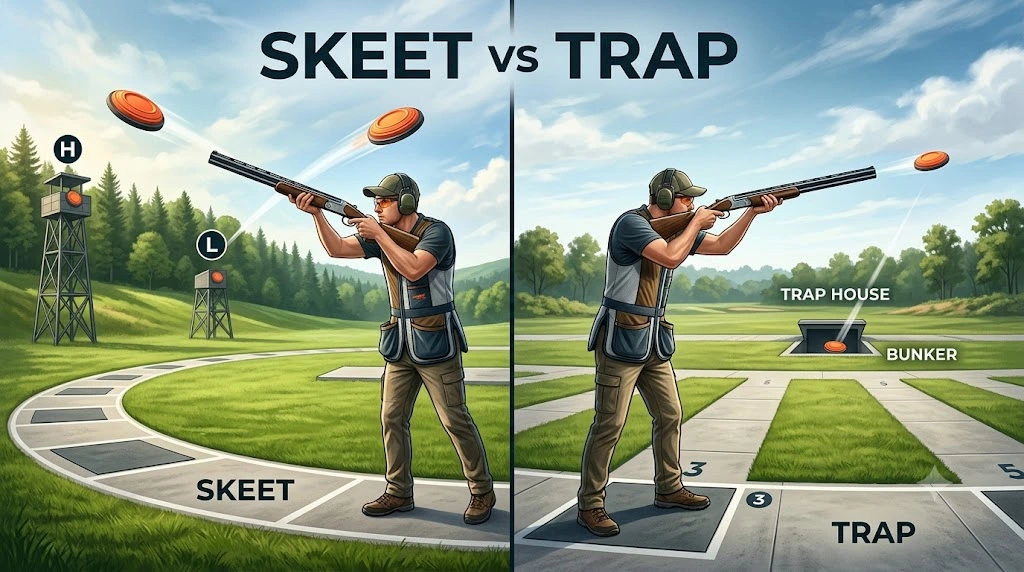
In skeet shooting, players stand in a half-circle. There are eight shooting stations set up around this circle. Two machines throw clay targets from towers on each side of the field. One machine is called the “high house,” and the other is the “low house.”
The targets cross paths in the middle of the field. This creates a fast, exciting shot for the shooter. You have to react quickly and swing your gun smoothly to hit the target. Many people say skeet shooting feels more social and relaxed compared to other clay sports, though it still takes real skill and focus.
What Is Trap Shooting?
Trap shooting is the older of the two sports. It dates back to the late 1700s in England. Back then, shooters used live birds released from traps, which is where the sport gets its name. Thankfully, today we use clay targets instead.
In trap shooting, there is only one machine. It sits in a bunker in front of the shooters. This machine throws targets away from the shooters, out into the field. Five shooting stations are arranged in a line behind the trap house.
The clay targets fly away from you at different angles every time. You never know exactly where the target will go. This unpredictability is what makes trap shooting so challenging. Shooters must stay alert and ready for anything. It is a game of patience, focus, and quick decision-making, all rolled into one exciting sport.
Skeet vs Trap: The Main Differences
When comparing skeet vs trap, the biggest difference is target direction. In skeet, targets cross in front of you from two houses. In trap, targets fly away from you from just one house. This changes everything about how you aim and shoot.
Another key difference in skeet vs trap is the field shape. Skeet fields are shaped like a half-circle with eight stations. Trap fields are shaped like a fan, with five stations in a straight line. The layout changes how you move and where you stand.
Gun position also differs between the two sports. In skeet, you often mount your gun before the target appears. In trap, many shooters keep the gun ready but not fully mounted. These small habits make a big difference in your shooting style and success rate over time.
Skeet vs Trap: Field Layout Explained
Let’s dig deeper into the actual field setup for skeet vs trap. A skeet field has two houses. The high house stands about ten feet tall. The low house is much shorter, around three feet tall. Both sit at opposite ends of the field.
Shooters move around eight stations in a half-circle pattern. Station one starts near the high house. Station seven sits near the low house. This layout lets shooters see targets from many different angles during one round, which keeps things exciting and varied.
Trap fields look completely different. There is one bunker in the center, called the trap house. Five shooting positions sit in a line, about sixteen yards back from the house. Shooters rotate through these five spots. Some trap fields also have handicap yardage lines further back, adding extra challenge for skilled shooters who want a tougher test.
Skeet vs Trap: Target Speed and Angles
Target speed matters a lot in skeet vs trap discussions. Skeet targets usually travel at a set speed, since the machines are calibrated the same way every time. This makes skeet shooting more predictable once you learn the pattern.
However, skeet targets cross in front of you, which means your timing needs to be nearly perfect. You are shooting at an angle, not straight on. This crossing motion is what makes skeet feel fast-paced and energetic, even though the actual speed stays fairly consistent from shot to shot.
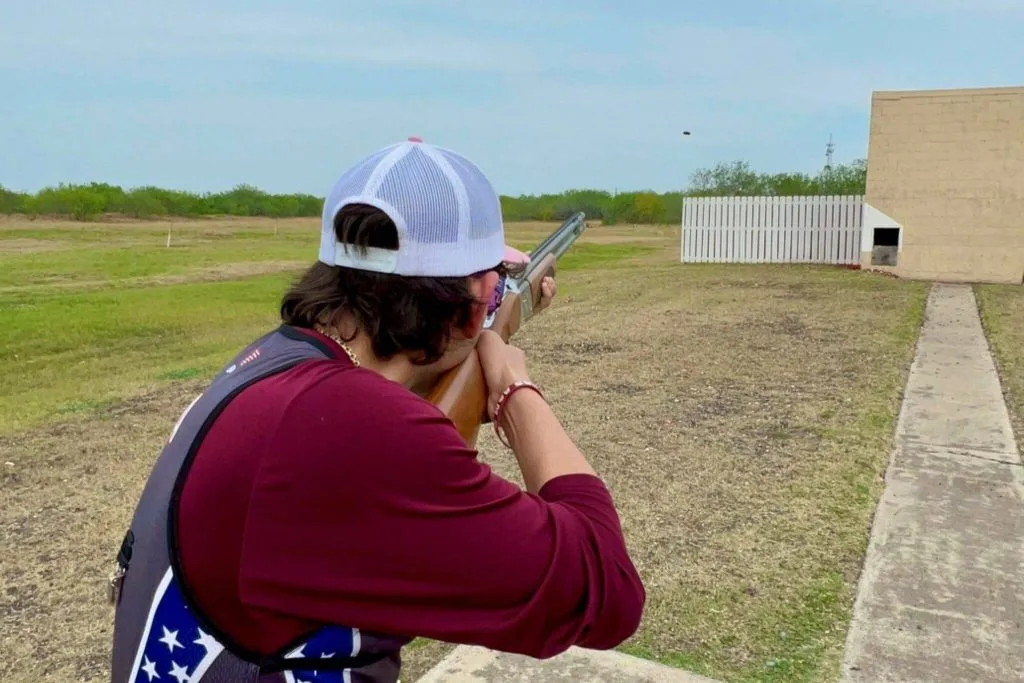
Trap targets behave very differently. The trap machine oscillates, meaning it swings side to side. Every target can fly at a new angle. This makes trap shooting less predictable and more mentally demanding. You truly never know exactly where the next target is headed, which many shooters find thrilling. It teaches you to expect surprises and react calmly under pressure.
Skeet vs Trap: Which Guns Work Best
Both sports use shotguns, but the ideal setup can vary slightly. For skeet vs trap, many skeet shooters prefer guns with more open chokes. This helps spread the shot pattern wider, which is useful since targets are often closer and moving fast across your view.
Trap shooters often choose tighter chokes. Since targets fly further away before you take the shot, a tighter pattern helps you hit them cleanly at a distance. Some trap guns also have a slightly raised rib, which helps shooters see the target better as it climbs.
Gauge choice matters too. Most competitive shooters in both sports use 12-gauge shotguns, since they offer a good balance of power and control. Beginners sometimes start with a 20-gauge for lighter recoil. Either way, a properly fitted gun makes a huge difference in comfort and accuracy for both skeet and trap.
Skeet vs Trap: Skill Level and Difficulty
People often ask which sport is harder, skeet or trap. Honestly, both take practice, but they challenge different skills. Skeet demands fast reflexes and smooth swinging, since targets cross quickly in front of you at a steady, known speed.
Trap demands sharp focus and adaptability. Since every target can fly at a new angle, you cannot rely on muscle memory alone. You must watch closely and adjust in real time. This unpredictability trips up many beginners who expect the same shot every round.
In my experience helping new shooters at local ranges, I have noticed skeet feels easier to learn at first, but trap often becomes more satisfying once you master reading the angles. Both sports reward practice and patience. Neither one is truly “easier” overall; they simply test different parts of your shooting ability.
Skeet vs Trap: Cost and Equipment Needed
Cost is a real concern for many new shooters comparing skeet vs trap. The good news is both sports use similar basic gear. You will need a shotgun, shells, eye protection, and ear protection no matter which sport you choose to pursue.
Range fees can vary depending on your location. Some clubs charge per round, while others offer memberships. Trap shooting, being more common in the United States, often has more available ranges, which can sometimes make it slightly cheaper or easier to access in rural areas.
Skeet shooting may require a bit more travel if your local range does not offer both houses needed for the sport. It is worth calling ahead to ask what your nearest range actually offers. Many clubs do support both sports, so you may not have to travel far. Always compare a few clubs before joining one long-term.
Skeet vs Trap: Which Is Better for Beginners
This is one of the most common questions about skeet vs trap. Many instructors suggest starting with trap shooting. The straightforward, single-house setup makes it easier to understand at first. You simply call for the target and shoot as it flies away.
Skeet shooting can feel a bit more complex for total beginners. Learning eight different stations and two houses takes more time to grasp. That said, some people find the variety of skeet more fun and engaging right from their very first lesson.
My honest suggestion is to try both before deciding. Most ranges offer trial rounds or introductory lessons. Trying skeet vs trap firsthand gives you a real feel for which one clicks with your personality. Some folks love the predictability of trap, while others crave the crossing action of skeet.
Skeet vs Trap: Which Builds Better Hunting Skills
Bird hunters often wonder which sport, skeet or trap, better prepares them for the field. The truth is, both sports build useful hunting skills, but skeet shooting tends to mimic real bird flushing more closely, since targets cross at different angles and heights.
Trap shooting, on the other hand, builds excellent skills for shooting birds that flush and fly straight away from you, like pheasants bursting from tall grass. This scenario happens often in upland bird hunting, making trap practice quite valuable for that specific hunting style.
Many experienced hunters actually practice both sports throughout the year. This well-rounded approach to skeet vs trap training helps them prepare for nearly any bird hunting situation they might encounter. If you hunt often, consider mixing both sports into your practice routine for the most complete skill set possible.
Skeet vs Trap: Safety Tips for Both Sports
Safety should always come first, no matter which sport you choose. In any skeet vs trap discussion, remember that eye and ear protection are absolutely essential every single time you step onto the range. Loud shotgun blasts can damage your hearing quickly.
Always keep your gun pointed in a safe direction, even when it is unloaded. Never assume a firearm is empty. Treat every gun as if it is loaded at all times. This simple habit prevents the vast majority of range accidents from ever happening in the first place.
Follow your range officer’s instructions closely. They call the shots, quite literally, for safety reasons. Wait for their signal before loading, shooting, or moving between stations. Both skeet and trap ranges have clear rules designed to keep everyone safe, so always ask questions if you feel unsure about anything.
Skeet vs Trap: Which One Should You Choose
So, after all this, which should you pick in the skeet vs trap debate? Honestly, there is no single correct answer. It truly depends on your personal goals, your local range options, and simply what feels most fun to you personally.
If you enjoy fast, crossing targets and a social half-circle format, skeet might suit you better. If you prefer a simpler layout with unpredictable angles and a classic feel, trap could be your perfect match. Some shooters even fall in love with both sports equally.
I always tell beginners not to overthink this decision too much. Go try both. Bring a friend. Ask questions at your local club. The skeet vs trap choice becomes much clearer once you have actually felt the targets fly and pulled the trigger yourself a few times.
Common Mistakes New Shooters Make
When learning skeet vs trap, beginners often make similar mistakes. One common error is stopping your gun swing right as you pull the trigger. This causes you to shoot behind the target. Keep your swing moving smoothly through the entire shot for best results.
Another mistake is gripping the gun too tightly. A tense grip actually slows down your reaction time and hurts your accuracy. Relax your hands and shoulders. Let the gun move naturally with your body instead of forcing it into position with excess tension.
Many new shooters also forget to keep both eyes open while aiming. Closing one eye limits your depth perception, which makes it harder to judge target distance and speed accurately. Practicing with both eyes open takes time to master, but it truly pays off in both skeet and trap shooting.
Practice Tips to Improve Your Score
Improving at skeet vs trap shooting takes consistent, focused practice. Start by dry firing at home, meaning practicing your mount and swing without any ammunition. This builds muscle memory safely and helps you feel more comfortable before heading to the actual range.
Take lessons from a certified instructor if possible. They can spot small mistakes in your stance or swing that you might never notice on your own. Even one or two lessons can dramatically improve your scores in both skeet and trap shooting within just a few weeks.
Finally, practice regularly rather than shooting once every few months. Consistency builds real skill over time. Keep a simple log of your scores and notes after each session. Reviewing this log helps you spot patterns and areas where you still need improvement in your skeet vs trap technique.
Conclusion
Skeet vs trap shooting are both wonderful sports with rich histories and loyal fans. Skeet offers fast, crossing targets and a social half-circle layout, while trap offers a classic, unpredictable challenge from a single house. Neither sport is better than the other; they simply offer different experiences.
The best way to decide is to try both for yourself. Visit your local range, ask an instructor for help, and give each sport a fair chance. You might discover a lifelong hobby, a great way to bond with friends and family, or even a new competitive passion.
Frequently Asked Questions
1. What is the main difference between skeet and trap shooting? The main difference in skeet vs trap is target direction. Skeet targets cross in front of you from two houses. Trap targets fly away from you from a single house in the center of the field.
2. Which is easier for beginners, skeet or trap? Many instructors say trap is simpler to learn at first because of its straightforward, single-house setup. However, some beginners find skeet more enjoyable due to its variety and social format.
3. Do skeet and trap use the same shotgun? Both sports use shotguns, often 12-gauge. However, skeet shooters usually prefer more open chokes, while trap shooters often choose tighter chokes for longer-distance shots.
4. Is trap shooting older than skeet shooting? Yes, trap shooting is older. It began in the late 1700s in England. Skeet shooting started later, in the 1920s, in the United States.
5. Which sport is better for hunting practice? Both help with hunting skills. Skeet mimics crossing birds well, while trap mimics birds flying straight away, like pheasants flushing from cover.
6. Can I try both skeet and trap at the same range? Many shooting clubs offer both sports at one location. Call ahead to confirm, since some smaller ranges only offer one of the two options.
View also: No Hitter vs a Perfect Game: What’s the Real Difference?
